Track & Interpret MADRS Scores Over Time
Managing depression can often feel like navigating a landscape with no map. Your symptoms can change from day to day, making it difficult to see the bigger picture. How can you tell if your treatment is working or if your condition is genuinely improving? This is where objective data becomes a powerful ally.
Managing depression is rarely a straightforward journey. When you track your MADRS scores, you transform subjective feelings into clear, measurable data. This creates a valuable record for monitoring your mental health journey. Regular tracking helps you and your healthcare provider make more informed decisions.
This guide will show you how to log, visualize, and understand your score trends. Whether for personal self-monitoring or to share with a professional, these steps will empower you. At MADRS.net, you can begin this process today with a free assessment that is both confidential and clinically trusted.
By the end of this article, you will have practical methods to transform your score history into actionable insights for better depression management.
Understanding Your Score Journey
Before you start tracking, it's essential to understand what your scores represent. This knowledge forms the foundation of your monitoring journey, helping you to interpret changes accurately and avoid common misunderstandings. A single score is just a snapshot. A series of scores tells a more complete story.
What Your Score Really Means
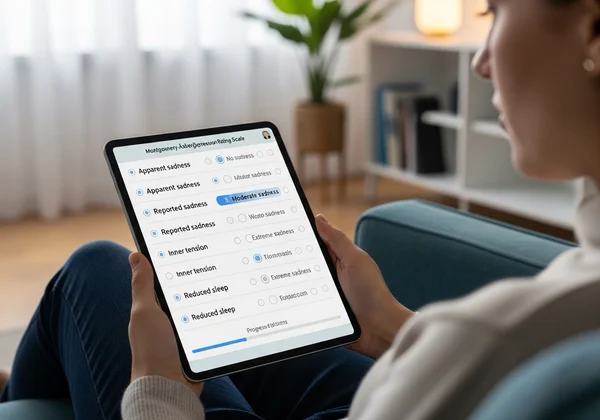
The Montgomery-Åsberg Depression Rating Scale is a respected clinical tool designed to measure the severity of depressive episodes. It consists of 10 questions, each targeting a specific symptom like apparent sadness, inner tension, or sleep disturbances. Each item is scored on a scale from 0 to 6, leading to a total score between 0 and 60.
Here’s a general breakdown of what the total score can indicate:
- 0–6: Normal / Symptom-free
- 7–19: Mild depression
- 20–34: Moderate depression
- >34: Severe depression
While the total score provides an overall picture, you should also examine the individual item scores. This provides a detailed view of your progress. For instance, a consistently high score on 'Concentration Difficulties' might reveal a specific area needing attention, even if your total score is decreasing.
Setting Realistic Expectations for Score Tracking
Tracking your scores is a marathon, not a sprint. Score fluctuations are normal. A bad day or stressful event might temporarily increase your score. This doesn't mean your treatment has failed. Focus on identifying long-term trends rather than reacting to daily changes.
A clinically significant change is often considered a 50% reduction in the total score from your baseline. However, even smaller, sustained decreases are a positive sign of progress. It's best to evaluate your progress over meaningful timeframes. Weekly or bi-weekly assessments are often useful when starting a new treatment, while monthly check-ins might be sufficient for long-term maintenance.
Practical Methods for Tracking Your Scores
Once you understand what the numbers mean, the next step is to establish a consistent tracking system. Having a reliable method ensures your data is organized and easy to analyze. The best system is one that you can stick with consistently.
Creating a Personalized Tracking System
You don't need complicated software to start tracking your progress. The most important thing is consistency. Choose a method that fits your lifestyle and preferences.
Here are a few simple options:
- Digital Spreadsheets: Use Google Sheets or Microsoft Excel to create a simple log. Create columns for the date, your total score, and any relevant notes (e.g., "Started new medication," "Stressful week at work"). This allows you to easily create graphs later.
- Paper-Based Journal: A simple notebook can be just as effective. Dedicate a section to your mental health tracking. Record the date and your score from each assessment. You can also use this space to journal about your feelings and any life events that might be influencing your mood.
- Dedicated Apps: While many mental health apps exist, using a consistent source for your score is key. The first step is always getting an accurate score, which you can do with a reliable online test. You can then input this score into your preferred tracking system.
Recommended Assessment Frequency
How often should you take the test? The answer depends on your situation. It's a good idea to discuss this with your healthcare provider, but here are some general guidelines.
During periods of change, such as starting a new therapy or adjusting medication, more frequent tracking can be beneficial. Taking the assessment weekly or every two weeks can provide quick feedback on how the intervention is working. For long-term maintenance, a monthly or quarterly assessment is often enough to monitor your stability and catch any signs of relapse early. If you experience a major life event or a sudden change in symptoms, an extra assessment can provide a useful data point.
Visualizing and Analyzing Your Score Trends
Collecting data is only the first step. The real power comes from analyzing that data to uncover patterns and insights. Visualizing your scores can make trends immediately obvious, helping you see progress that might otherwise be missed.
Simple Techniques for Pattern Recognition
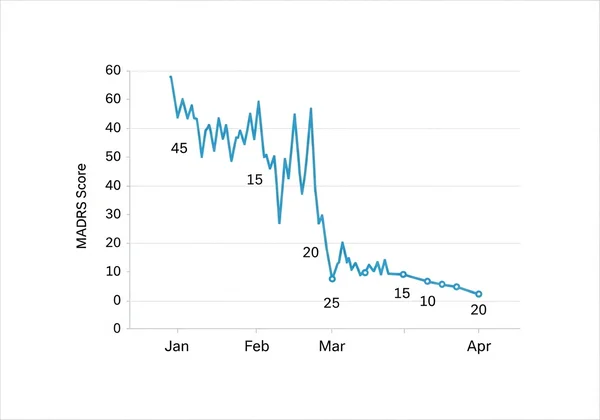
A line graph is one of the most effective ways to visualize your scores over time. Plot the date on the horizontal axis (X-axis) and your score on the vertical axis (Y-axis). This simple chart will show you the direction of your mental health journey. An upward trend might be an early warning sign, while a downward trend can be a great source of motivation.
Look for patterns related to seasons, holidays, or specific life stressors. For example, do your scores tend to rise during the winter months or around certain anniversaries? Identifying these triggers allows you to prepare for them proactively. Spotting these patterns can help you and your provider develop strategies to manage these challenging periods.
Interpreting Long-Term Data
When looking at your data over several months, try to distinguish between temporary fluctuations and a genuine, sustained trend. A single high score after a few weeks of improvement is likely just a blip. However, a series of gradually increasing scores may signal that an adjustment to your treatment plan is needed.
Correlate your score changes with life events and interventions. Did your score start to drop a few weeks after you began a new exercise routine? Did it rise after a period of poor sleep? Connecting your scores to your actions and environment gives you concrete evidence of what helps and what hurts your mental well-being. Using this data can make your conversations with healthcare providers more collaborative and productive.
Using Your Tracking Data for Better Mental Health Outcomes
Your tracking data is not just for personal reflection; it's a powerful tool for advocacy and collaborative care. When you bring clear data to your appointments, you transform the conversation from "I think I feel a little better" to "My score has dropped by eight points over the last month."
Communicating Progress to Healthcare Providers
Healthcare providers appreciate objective data. Before your appointment, prepare a summary of your tracking record. You can print your graph or have it ready on your phone. This allows your doctor or therapist to quickly understand your progress since your last visit.
When discussing your data, be open and constructive. Point out both the improvements and the challenges. For example, you could say, "My overall score is down, but I've noticed my 'Sleep' score is still high." This evidence-based approach helps your provider tailor your treatment plan more effectively, leading to better outcomes.
Personalized Intervention Strategies
Your tracking data can empower you to make personalized adjustments to your daily life. If you notice your score creeping up, you can review your recent notes to identify potential causes. Maybe you stopped exercising or have been working late. This early awareness allows you to intervene before your symptoms become more severe.
Use your data to celebrate progress. Seeing a downward trend in your scores is a tangible reminder that your efforts are paying off. Acknowledging these milestones can provide a significant boost to your motivation and morale. Recovery is a journey, and your tracking data serves as a map of how far you've come. To begin creating this map, take the test and log your first score.

Your Next Steps in Depression Monitoring
Tracking your MADRS scores over time creates a personal roadmap of your mental health journey that shows your progress in a way that feelings alone can't capture. It provides a reliable measure of your progress, empowers you to have more productive conversations with your doctor, and helps you identify what truly works for you.
By monitoring trends over time, you become an active participant in your depression management, not a passive one. Your score history doesn't just show where you've been—it helps illuminate the path forward. You gain the confidence to make informed decisions and take control of your well-being.
Ready to take the first step? Start your tracking journey today. Use the free, clinically trusted assessment on MADRS.net to get your initial score and begin building your personal mental health toolkit.
Disclaimer: This article is for informational purposes only and does not constitute medical advice. The MADRS assessment is a tool to support, not replace, professional medical diagnosis and treatment. Please consult with a qualified healthcare provider for any health concerns.
Frequently Asked Questions About MADRS Score Tracking
How often should I take the MADRS test for accurate tracking?
The ideal frequency depends on your situation. For those starting or changing treatment, weekly or bi-weekly tests can offer valuable feedback. For long-term monitoring, a monthly test is often sufficient. Always consult your healthcare provider for a personalized recommendation.
What's considered a meaningful change in my score?
Clinically, a 50% reduction from your baseline score is often seen as a significant response to treatment. However, any sustained downward trend is a positive sign of progress. The key is to look at the overall pattern over weeks and months, not just a single score.
Can I track my scores if I'm not currently in treatment?
Yes. Self-monitoring can be a valuable tool for understanding your mental health, even if you are not in active treatment. It can help you identify patterns and decide when it might be time to seek professional support. You can start tracking anytime.
How should I discuss my tracking data with my healthcare provider?
Be prepared and organized. Bring a simple graph or a log of your scores and any relevant notes. Present the data clearly and use it to ask specific questions about your treatment plan. This collaborative approach can lead to more effective care.
Are there any digital tools specifically designed for score tracking?
While some general mental health apps allow manual entry, the first step is always getting a reliable score. MADRS.net provides a clinically sound online test to get your score. You can then use a simple spreadsheet or a dedicated notebook to log this score and track it over time.