Prepare for a More Accurate MADRS Retest
Why one score means more when you prepare for the next one
A repeat MADRS score can be helpful, but only when it reflects more than one unusually heavy day. Without a little preparation, it is easy to retest from panic, relief, or a temporary swing that does not represent the wider pattern.
That is why the days between scores matter. A few short notes about mood, sleep, concentration, and daily functioning can make the next result much easier to understand.
Used that way, a MADRS check-in tool becomes more than a number. It becomes a structured way to monitor change over time. Disclaimer: The information and assessments provided are for educational purposes only and should not replace professional medical advice, diagnosis, or treatment.
What the MADRS retest is actually checking

A retest is not only asking whether today feels bad. It is trying to capture a broader picture of recent symptom severity.
The 10-item structure and score range
PubMed-indexed material on MADRS describes it as a 10-item depression scale. Each item is scored from 0 to 6, which creates a total score range of 0 to 60. That structure is one reason the scale can feel more precise than a general mood check.
The number matters, but the pattern behind the number matters more. If several symptoms have shifted in the same direction, the retest becomes easier to interpret.
Why one unusually hard day can blur the picture
Clinical literature indexed by PubMed describes MADRS as a tool for assessing depression severity and monitoring change over time. It is not a stand-alone diagnosis. That means the retest works best when it reflects a recent pattern instead of one isolated spike.
One unusually low day can pull attention toward the most painful moment. One unusually calm day can do the opposite. A better retest usually comes after a short period of observation, not from reacting to a single swing.
What to notice before you repeat the test
The goal is not to build a perfect symptom diary. The goal is to collect enough detail to make the next score more grounded.
Mood, sleep, and concentration changes
Start with the areas that shift most obviously from day to day. Has mood stayed heavy most of the week, or only on some days? Has sleep changed in length or quality? Has concentration felt slower, scattered, or harder to sustain?
These notes do not need to be long. A few words for each day can already show whether the pattern is broad, mixed, or improving.
Daily functioning and emotional numbness
Next, notice what daily life feels like. Is it harder to start routine tasks, respond to messages, work, study, or care for basic needs? Is there sadness, emptiness, or a more muted sense that things simply feel flat?
These are often the details that help a repeat score feel real instead of abstract. They connect the number to how life is actually moving.
What has changed since the last score
Before retesting, ask 3 small questions:
- What feels worse than last time?
- What feels the same?
- What feels even slightly easier?
That 3-part check helps keep the retest balanced. It leaves room for both distress and progress.
How to use the next score responsibly

A more accurate retest is not the same as a final answer. It is a stronger checkpoint.
Look for patterns, not perfect numbers
Try to compare patterns before comparing points. Did sleep worsen along with mood? Did concentration improve even if motivation did not? Did daily functioning narrow more than before?
That kind of review makes a depression monitoring tool more useful. It keeps the focus on change over time instead of treating every score difference as a verdict.
When you should not wait for another retest
Do not wait for another retest if symptoms are becoming unsafe or overwhelming. Seek help sooner if depression is seriously affecting daily functioning, if you are struggling to stay safe, or if the emotional burden feels too heavy to manage alone.
SAMHSA's National Helpline is free, confidential, and available 24/7, 365 days a year for treatment referral and information. If there is immediate danger or concern about self-harm, contact local emergency services right away.
If the trend is getting heavier, seek professional help from a qualified clinician rather than relying on repeated self-testing to answer everything.
A low-pressure retest routine you can actually keep
A simple routine is more valuable than an intense one that falls apart after a few days.
Keep a short note between tests
Use one line a day if needed. Mood, sleep, concentration, energy, and daily functioning are enough to start. Short notes are easier to keep honest and easier to review later.
The point is not to document every feeling. The point is to see whether a pattern is forming.
Retest on a schedule, not from panic
Retesting works better when it follows a plan. A short gap with notes in between is usually more useful than repeating the scale every time a hard evening happens.
That rhythm also protects the tool from turning into reassurance-seeking. A retest should support monitoring, not become another source of pressure.
What to do next if the trend feels heavier
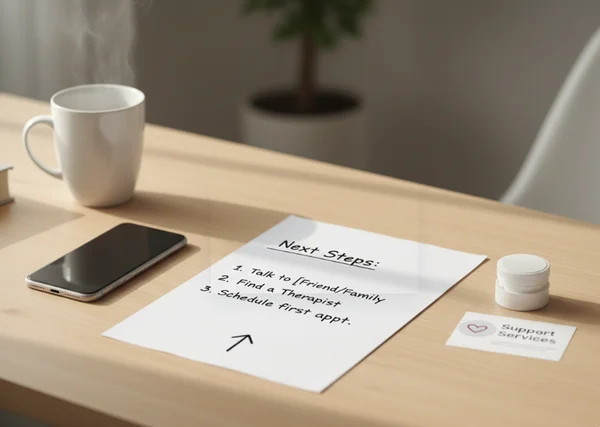
If the trend feels heavier, bring the pattern forward instead of handling it alone. A short record of symptoms, functioning, and score changes can make a conversation with a doctor, therapist, or counselor more concrete.
What matters most is not chasing the perfect retest moment. What matters is noticing when the overall trend is pointing toward more distress, less functioning, or more safety concern. If that is happening, seek professional help instead of waiting for one more score.
FAQ about MADRS retesting
Should you retest after one bad day?
Usually no. One difficult day can matter, but a short stretch of notes often gives the next score more context and more value.
How often should you repeat the MADRS?
The most useful timing depends on why you are tracking. In general, it helps to leave enough space for a real pattern to emerge instead of reacting to every mood shift.
When should you contact a professional?
Contact a professional when symptoms are worsening, daily functioning is dropping, or safety concerns are present. A retest can support that conversation, but it should not replace it.