MADRS AI Reports: How Clinical Data Becomes Personalized Insights
In the evolving world of digital mental health, turning clinical data into meaningful insights is a huge step forward for patient care. For both clinicians and individuals, understanding what a MADRS score means is key to managing depression effectively. But how does a number become a roadmap for well-being? Our advanced AI analysis system at MADRS.net bridges this gap. It processes your MADRS assessment using sophisticated algorithms trained on thousands of clinical cases.
This article reveals the sophisticated technology powering our AI reports. We will explore how artificial intelligence interprets your responses, identifies patterns in depressive symptoms, and creates personalized recommendations that support clinical judgment. Whether you're a healthcare provider exploring new tools or an individual curious about the science behind your results, this guide will provide valuable context. It will help you better understand the insights you can gain from an AI-powered assessment.
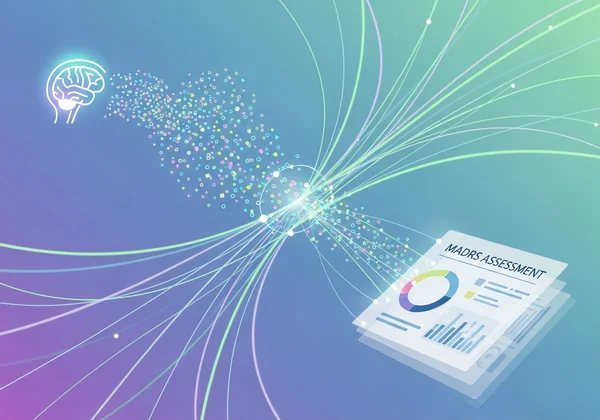
How MADRS.net Processes Your Assessment Data
The journey from your answers to a personalized report involves several precise steps. Our system is designed to handle your information securely while applying powerful analytical models. We ensure that every piece of data contributes to a clear and helpful final insight. This process combines clinical standards with cutting-edge technology to give you a deeper understanding of your results.
Data Collection and Normalization
The first step is gathering your responses from the 10-question MADRS assessment. This raw data is crucial, but it needs to be prepared for analysis. We use a process called normalization to structure the data consistently. This step ensures that the AI can accurately compare different symptom severities and patterns without bias.
During this stage, your privacy is our top priority. All personal information is handled with strict confidentiality and security protocols. The system focuses only on the anonymized response data needed for the AI model to function. This foundational step guarantees that the analysis is both reliable and secure, creating a trustworthy basis for the insights that follow.
Machine Learning Architecture for Depression Pattern Recognition
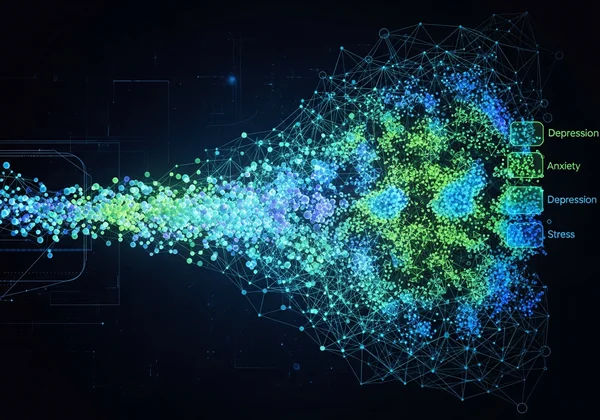
Once your data is prepared, it's fed into our machine learning model. This isn't just a simple calculator; it's a complex system designed to recognize intricate patterns associated with depression. This architecture uses algorithms trained on a vast and diverse clinical dataset. These algorithms help the AI understand the subtle connections between different symptoms.
For example, the AI can identify common symptom clusters, such as the relationship between reported sadness, sleep disturbances, and concentration difficulties. By recognizing these patterns, the system goes beyond a simple total score. It starts to build a more detailed picture of an individual's specific experience with depression, which is the key to providing truly personalized feedback.
From Raw Scores to Clinical Interpretation
A simple MADRS score tells you the overall severity of symptoms, but it doesn't explain the "why" or "how." This is where our AI model excels. It transforms the raw numbers from your assessment into a meaningful narrative. It helps you and your healthcare provider understand the underlying dynamics of your mental state.
This process involves looking at which symptoms are most prominent and how they interact. The AI provides context that makes the numbers actionable, turning a score into a tool for conversation and planning. To see how this works in practice, you can complete the MADRS online test and explore your own results.
Weighted Analysis of Depression Symptom Clusters
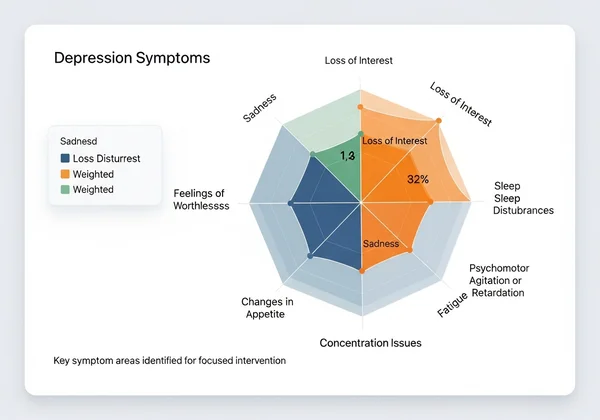
Not all symptoms of depression carry the same weight or impact on a person's life. Our AI uses a weighted analysis to evaluate symptom clusters. This means it gives more significance to certain combinations of symptoms that clinical research has shown to be particularly important. For instance, severe inner tension combined with pessimistic thoughts might be flagged as a critical area for focus.
This method allows the report to highlight the most pressing challenges a person may be facing. Instead of a flat summary, you receive a prioritized list of insights. This helps you and your clinician focus on the areas that need the most immediate attention, making treatment planning more efficient and targeted.
Contextual Factors in AI-Driven Assessment
Depression doesn't exist in a vacuum. To create a truly personalized report, our system can optionally consider contextual factors you provide, such as lifestyle, stressors, or ongoing treatments. When this information is available, the AI uses it to refine its interpretation and recommendations. This makes the final report more relevant to your unique situation.
For example, the AI's advice for someone experiencing work-related stress will differ from its suggestions for someone dealing with chronic illness. By incorporating this context, the AI-driven assessment becomes a more dynamic and empathetic tool. It acknowledges that your life circumstances play a vital role in your mental health journey.
Validating AI Recommendations Against Clinical Standards
Technology is a powerful tool, but in mental health, trust is everything. We are committed to ensuring our AI-generated reports are not just innovative but also reliable and ethically sound. That's why we rigorously validate our system's recommendations against established clinical standards and human expertise.
Our goal is to create a tool that complements, not replaces, the role of a healthcare professional. We believe in transparency and want you to feel confident in the insights provided. This commitment to validation is central to our mission of offering a trustworthy resource for mental health monitoring.
Comparative Analysis with Human Clinician Interpretations
To ensure our AI's accuracy, we regularly conduct comparative analyses. In these studies, we compare the interpretations and recommendations generated by our AI with those provided by experienced human clinicians who review the same anonymized data. The goal is to ensure that the AI's insights align closely with expert clinical judgment.
These comparisons help us fine-tune our algorithms and confirm that the reports are clinically relevant and helpful. This ongoing process of validation ensures that the technology remains a reliable support tool for both individuals and professionals seeking to understand depression symptoms. It's a key part of how we build a trusted assessment.
Limitations and Ethical Considerations in AI Mental Health Analysis
We are also transparent about the limitations of AI in mental health. Our AI report is an informational tool, not a substitute for a professional medical diagnosis or treatment plan. It is designed to provide insights and support conversations with a qualified healthcare provider. We strongly encourage all users to discuss their reports with a doctor or therapist.
Ethical considerations are at the forefront of our work. We prioritize user privacy, data security, and the responsible application of technology. The AI is designed to empower users with information, not to make decisions for them. We believe that by being open about these boundaries, we can build a safer and more trustworthy digital mental health ecosystem.

Your Path to More Informed Mental Health Decisions
Understanding how our AI analyzes MADRS data empowers you to use technology effectively for mental health awareness. Our system transforms the standard MADRS assessment into a deeper, personalized narrative about your well-being. It helps identify key symptom patterns, considers your unique context, and provides insights validated against clinical expertise.
This technology empowers you to have more informed conversations with your healthcare provider and take a more active role in monitoring your mental health. By turning data into clear, actionable insights, we help you see the full picture.
Discover what insights await. Begin your confidential assessment today. Start your test on our homepage and unlock your personalized insights.
FAQ Section
How accurate is the AI analysis compared to human clinical interpretation?
Our AI analysis is designed to align closely with the interpretations of experienced clinicians. Through continuous comparative studies, we ensure the system's insights are clinically relevant and reliable. However, the AI serves as a supportive tool and is not intended to replace the nuanced judgment of a qualified healthcare professional.
What data does the AI use to generate personalized recommendations?
The AI primarily uses your answers to the 10 MADRS questions. To enhance personalization, it can also incorporate optional background information you choose to provide, such as lifestyle factors or current stressors. All data is anonymized and processed securely to protect your privacy.
Can I trust the AI report for treatment decisions?
No. The AI report is an informational tool designed to support, not replace, professional medical advice. It provides valuable insights that can help you and your doctor have a more informed discussion about your mental health. All treatment decisions should be made in consultation with a qualified healthcare provider. You can get your report to share with your doctor.
How does the AI protect my privacy while analyzing my responses?
We take your privacy very seriously. All data is handled with strict security protocols. Personal identifiers are removed, and the analysis is performed on anonymized information. Our privacy policy clearly outlines how we protect your data every step of the way.
How is the AI system updated with new depression research findings?
Our team of experts continuously monitors the latest clinical research in depression and mental health. The machine learning model is periodically retrained and updated with new, validated data and findings. This ensures that the insights and recommendations provided by our system remain current and aligned with the latest scientific understanding.