DSM-5 Depression Test: What It Can and Cannot Tell You
A dsm 5 depression test can feel appealing when you want a clear answer about low mood, loss of interest, sleep changes, guilt, fatigue, or concentration problems. The DSM-5 is a clinical reference used by trained professionals, while online screeners are usually educational tools that organize symptoms and severity signals. That difference matters. An online checklist may help you notice patterns, prepare better questions, and decide whether to seek professional support, but it cannot replace a full clinical evaluation. If you want a structured way to reflect on current depression severity, an online MADRS assessment can provide a focused symptom snapshot that is easier to discuss with a clinician.
What People Usually Mean by a DSM-5 Depression Test
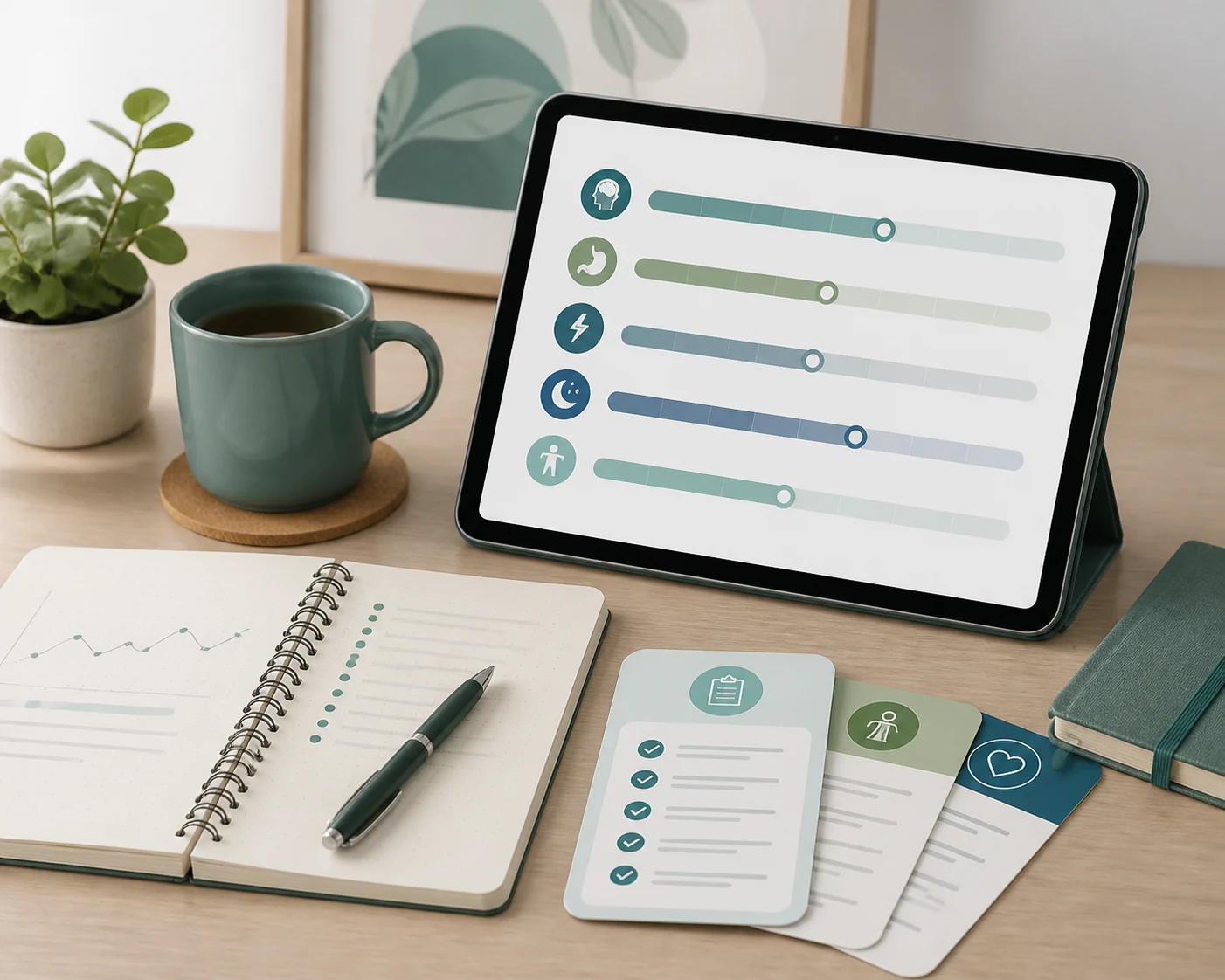
People search for a DSM-5 depression test for several different reasons. Some want to know whether their symptoms resemble major depressive disorder. Others want a severity score, a private self-check, or language they can use when talking with a mental health professional. These are related goals, but they are not the same goal.
DSM-5 criteria are a framework for clinical classification. They look at symptom count, symptom duration, functional impact, rule-outs, and the person's broader history. A questionnaire or online depression test usually does something narrower: it asks about symptoms over a defined time window and may provide a score or category. The score can be useful, but the score is not the whole clinical picture.
That is why a careful article about this topic should separate three layers:
- Criteria: the clinical rules a professional considers.
- Screening: a brief tool that flags symptoms worth discussing.
- Severity rating: a structured way to describe how intense symptoms seem right now.
MADRS belongs mostly in the severity-rating layer. PHQ-9 is commonly used as a screening and severity tool. DSM-5 criteria sit in the clinical decision layer. Confusing those layers can make online results feel more final than they are.
DSM-5 Criteria in Plain English
For a major depressive episode, DSM-5-style criteria focus on whether a cluster of depressive symptoms has been present during the same two-week period and represents a change from usual functioning. At least one central feature is usually depressed mood or loss of interest or pleasure. Other symptoms can involve appetite or weight change, sleep change, slowed or agitated movement, low energy, feelings of worthlessness or excessive guilt, difficulty thinking or concentrating, and thoughts of death or self-harm.
The criteria also consider whether symptoms cause meaningful distress or problems in daily life. A person may feel deeply low, but a clinician still has to consider context: grief, medical conditions, medications, substance use, bipolar-spectrum history, trauma, anxiety, and other factors may shape what the symptoms mean and what support is appropriate.
This is where online self-checks reach their limit. A screen can ask whether symptoms are present. It cannot fully evaluate context, timing, safety, physical health, medication effects, or the difference between overlapping mood disorders. It also cannot understand what is typical for your culture, relationships, work demands, or life stage. Those details are often essential.
If there is any concern about self-harm, urgent danger, overdose, severe withdrawal, or not being able to stay safe, use emergency or crisis support in your area right away. If you are in the United States and need treatment referral or mental health and substance-use information, SAMHSA's National Helpline is a free, confidential service available all day and year-round.
How Online Depression Tests Differ From DSM-5 Criteria
Online tests are usually built around standardized questions. They may ask how often symptoms happened, how much they interfered with life, or how severe a symptom felt over the last week or two. That can be genuinely useful, especially when memory feels foggy or emotions are hard to summarize. A score gives you a starting point.
Still, an online depression test is not the same as a clinical evaluation. A clinician can ask follow-up questions, notice contradictions, assess risk, review medication and health history, and consider whether symptoms fit another condition better. A digital tool can support that conversation, but it should not close the conversation.
For example, PHQ-9 maps closely to common depressive symptoms and is widely used in health care settings. MADRS takes a different route: it is a 10-item severity scale often used to measure depression severity and track change over time. The MADRS items cover areas such as apparent sadness, reported sadness, inner tension, reduced sleep, reduced appetite, concentration difficulties, lassitude, inability to feel, pessimistic thoughts, and suicidal thoughts.
Because MADRS is sensitive to changes in symptom intensity, it can be helpful when you want to compare how you felt last week with how you feel after a treatment change, therapy sessions, sleep disruption, a stressful life event, or a period of recovery. That is the practical value of MADRS-based score tracking: it turns a vague sense of "better" or "worse" into something you can review over time.
What a Severity Score Can Help You Notice
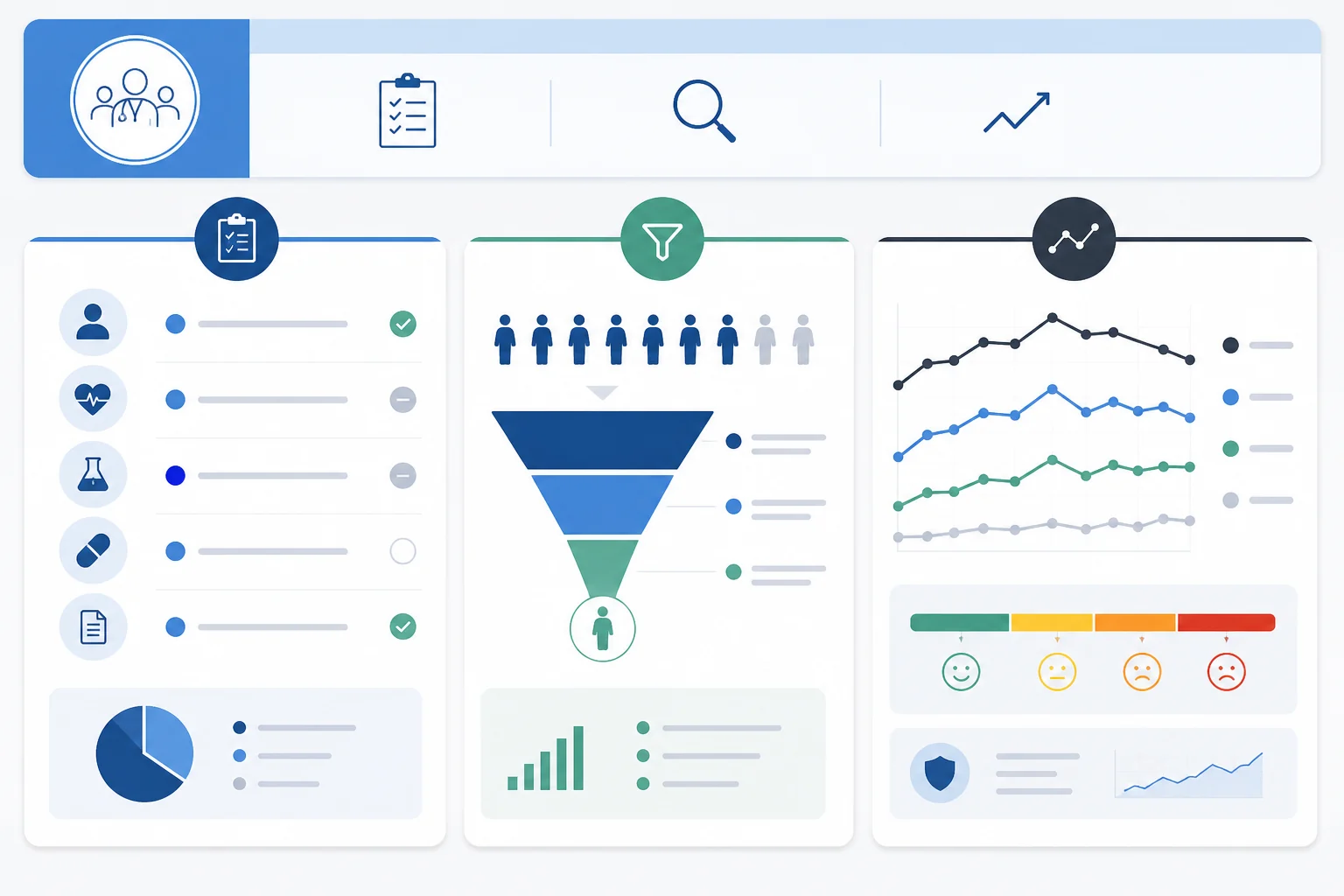
A severity score is not a verdict. It is a structured reflection of symptom intensity at a point in time. Used carefully, it can help you notice patterns that might otherwise blur together.
First, a score can make symptom language more specific. Instead of saying "I have been down," you might notice that sleep, appetite, concentration, and inner tension have changed together. That makes a professional conversation more efficient and less dependent on memory.
Second, a score can help with trend tracking. One score alone is limited. Several scores taken under similar conditions may show whether symptoms are broadly stable, improving, or intensifying. This is especially useful when paired with notes about sleep, alcohol use, medication changes, therapy appointments, stressful events, exercise, social contact, or physical illness.
Third, a score can help you decide what kind of support to consider. Mild symptoms may still deserve attention if they last, interfere with responsibilities, or feel unlike your usual self. Moderate or severe symptoms, self-harm thoughts, substance-use concerns, or major functional disruption are stronger reasons to involve a mental health professional promptly.
Fourth, a score can reduce the pressure to explain everything perfectly. Depression symptoms can make communication harder. A structured result gives you a shared reference point without forcing you to tell your whole story at once.
DSM-5, PHQ-9, and MADRS: A Practical Comparison
The easiest way to compare these tools is to ask what each one is for.
DSM-5 criteria are used in clinical evaluation. They help professionals classify mental health conditions and consider whether symptoms meet a recognized pattern. They require context and judgment.
PHQ-9 is a short self-report questionnaire used widely in primary care and mental health settings. It asks about nine symptom areas over the past two weeks. It is often used for screening and severity monitoring, and its scoring is simple enough to repeat.
MADRS is a 10-item depression severity scale. It is especially associated with measuring symptom change, including during treatment monitoring and research. Online MADRS tools make that structure easier to access, but the result still needs careful interpretation.
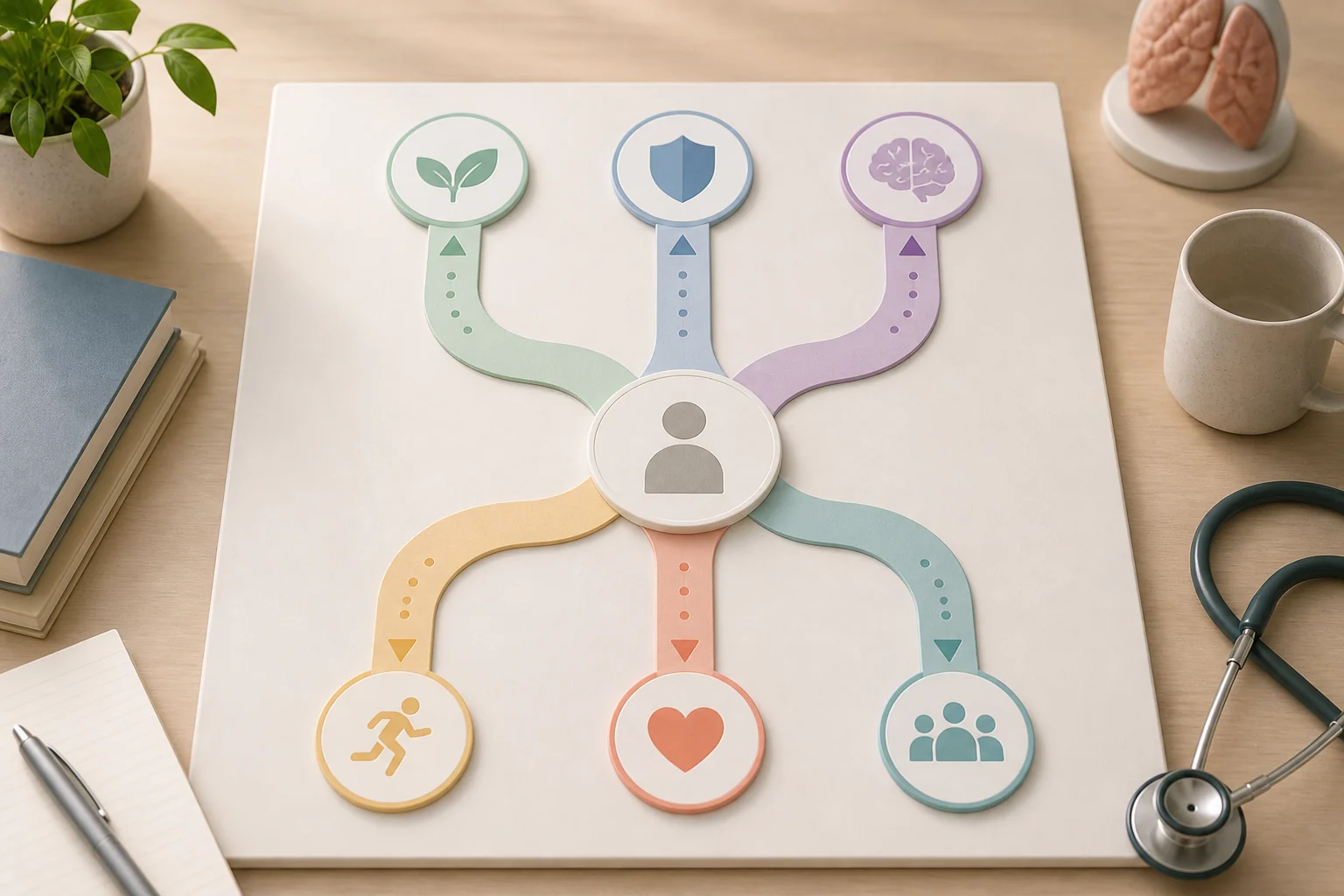
These tools can complement each other. A person might use PHQ-9 in a primary care visit, MADRS to track severity shifts, and DSM-5 criteria as part of a clinician's broader assessment. The important point is that a test result should invite better reflection and better care, not replace either.
Types of Depression People Ask About
Searchers often ask about "six types of depression." Lists vary because depression can be grouped by clinical category, timing, trigger, symptom pattern, or relation to another condition. A practical educational list might include:
- Major depressive disorder: episodes with a cluster of depressive symptoms and functional impact.
- Persistent depressive disorder: longer-lasting depressive symptoms that may be less intense but more chronic.
- Seasonal pattern depression: depressive episodes that tend to recur during particular seasons.
- Peripartum or postpartum depression: depressive symptoms during pregnancy or after birth.
- Bipolar depression: depressive episodes that occur within bipolar disorder and need different clinical handling.
- Substance or medication-related depressive symptoms: mood symptoms associated with substances, withdrawal, medications, or medical factors.
This list is not a self-labeling tool. Its purpose is to show why a symptom checklist alone can be incomplete. Two people may report similar sadness, sleep disruption, or low energy, but the safest next step can differ depending on timing, mania history, substance use, medical issues, or postpartum status.

When Substance Use, Withdrawal, or Overdose Terms Appear in the Search
The keyword set around this topic includes terms such as SAMHSA, addiction, recovery, alcohol withdrawal, drug rehab, overdose, 12 steps, Vivitrol, and treatment resources. That is a signal that many searchers are not dealing with mood symptoms in isolation. Alcohol use, drug use, withdrawal symptoms, grief, chronic stress, and codependency concerns can all sit near depression searches.
If substance use is part of the picture, keep the self-check modest. Do not try to sort everything out with one online depression test. Withdrawal, combined substance use, overdose risk, and medication-assisted treatment questions deserve direct professional guidance. Depression symptoms and substance-use symptoms can intensify each other, and safety planning may matter more than scoring precision.
For nonurgent situations, writing down timing can help: when symptoms began, whether they changed after stopping or reducing a substance, whether sleep changed first, whether cravings or withdrawal symptoms are present, and whether mood improves during sober periods. For urgent overdose symptoms, severe withdrawal symptoms, confusion, chest pain, seizures, or immediate safety concerns, seek emergency help right away.
How to Use an Online Result With a Mental Health Professional
Bring the result as a conversation aid, not as proof. A useful note might include the date, the tool used, your score or symptom pattern, the time period covered, and two or three real-life examples of what changed. Examples are often more helpful than labels: missing work, withdrawing from friends, eating much less, sleeping twelve hours, waking at 3 a.m., losing interest in usual activities, or struggling to concentrate.
You can also prepare a few questions:
- Which symptoms seem most important to discuss first?
- Should we screen for anxiety, bipolar disorder, trauma, substance use, sleep problems, or medical causes?
- How often should I repeat a severity measure?
- What changes would mean I should seek help sooner?
- What should I do if self-harm thoughts appear or intensify?
This approach gives the professional something concrete while leaving room for a full assessment. It also helps you avoid over-reading a single score.
A Careful Way to Reflect Before Your Next Step
If you came here looking for a dsm 5 depression test, the most useful next step may be to separate curiosity from urgency. Curiosity sounds like: "I want better language for what I have been feeling." Urgency sounds like: "I may not be safe," "I cannot function," "withdrawal feels severe," or "my symptoms are escalating quickly." Urgency deserves immediate human support.
For nonurgent reflection, choose one structured tool, answer based on the requested time window, save the date, and add a few notes about context. Then repeat only often enough to notice patterns, not so often that the score becomes reassurance-seeking. An optional depression severity self-reflection tool can be part of that process when you want a focused MADRS score to bring into a professional conversation.
FAQ
What are the DSM-5 criteria for diagnosing depression?
DSM-5-style criteria for a major depressive episode look at a cluster of symptoms over the same two-week period, with depressed mood or loss of interest usually central. Other symptoms can include sleep, appetite, energy, concentration, guilt or worthlessness, movement changes, and thoughts of death or self-harm. A clinician also considers distress, impairment, medical causes, substances, medications, grief, and bipolar-spectrum history.
Can I take the DSM-5 online?
You can read educational summaries and complete online depression screeners, but the DSM-5 itself is a professional clinical reference. Online tools can help you organize symptoms and decide what to discuss, but they should not be treated as a final clinical answer.
How severe is my depression?
Severity is best understood through both symptom intensity and daily impact. A structured scale such as MADRS or PHQ-9 can provide a score, but the meaning of that score depends on context, safety, functioning, duration, and professional judgment.
What are six types of depression?
Common educational groupings include major depressive disorder, persistent depressive disorder, seasonal pattern depression, peripartum or postpartum depression, bipolar depression, and substance or medication-related depressive symptoms. The labels overlap in real life, so a professional assessment is important when symptoms last, worsen, or disrupt functioning.
Is MADRS the same as a DSM-5 depression test?
No. MADRS is a depression severity rating scale. DSM-5 criteria are part of clinical evaluation. MADRS can help track symptom intensity, while DSM-5 criteria help a professional evaluate whether symptoms fit a recognized clinical pattern.
When should I seek help instead of using another online test?
Seek help promptly if symptoms are severe, last more than a couple of weeks, interfere with work or relationships, involve self-harm thoughts, follow major substance use or withdrawal, or make daily life feel unmanageable. Use emergency support if there is immediate danger.