Brief Depression Symptoms, Recurrent Episodes, and What to Track
Brief depression can feel confusing because the word "brief" sounds small, while the experience may still be heavy, disruptive, and hard to explain. A low mood that lasts a few days may be a response to stress, sleep loss, grief, conflict, hormones, medical issues, or substance use. It may also be part of a recurring mood pattern that deserves careful attention. If you want a structured way to observe depression-related symptoms over the past week, an online MADRS self-reflection tool can help you organize what you notice before a conversation with a qualified professional.
What Brief Depression Means
Brief depression is not one single everyday phrase with one single meaning. People use it to describe a short period of low mood, a brief depressive episode, a temporary depressive reaction, or a recurring pattern of depressive symptoms that comes and goes quickly.
In clinical writing, the phrase recurrent brief depression is usually more specific. It describes repeated depressive episodes that are shorter than a typical major depressive episode but still include meaningful depressive symptoms and impairment. The "brief" part refers to duration, not importance. A short episode can still affect sleep, concentration, appetite, work, relationships, and safety.
For a reader, the practical question is not "Does a short episode count?" The better question is: what happened, how long did it last, how often has it happened, and how much did it interfere with daily life?
Recurrent Brief Depression Versus a Short Low Mood
A short low mood may lift after rest, problem-solving, social support, or a change in circumstances. It may be understandable in context and may not return in a predictable way. Recurrent brief depression is different because the pattern repeats.
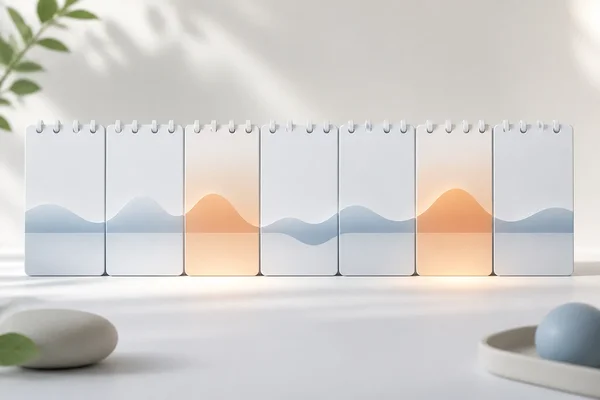
Common descriptions of recurrent brief depression often include episodes that last only a few days, recur across months, and involve symptoms similar to depressive episodes: low mood, loss of interest, low energy, guilt or worthlessness, changes in sleep or appetite, poor concentration, agitation or slowing down, and sometimes thoughts of death or self-harm. The shorter duration can make the pattern easy to dismiss, especially if the person appears "fine" between episodes.
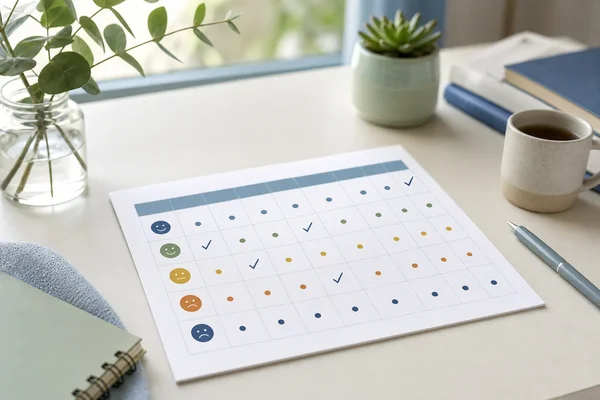
That is why tracking matters. If the same cluster of symptoms returns again and again, the pattern may be more clinically relevant than any single episode. A weekly scale, symptom notes, and a simple calendar can show whether the issue is isolated, seasonal, stress-linked, menstrual-cycle-linked, substance-linked, or recurring without an obvious trigger.
Recurrent Brief Depression Symptoms to Notice
Brief depression symptoms can look similar to symptoms people associate with longer depressive episodes. The difference is that they appear in a compressed window. A person may have a few days of very low mood, reduced pleasure, sleep disruption, slowed thinking, irritability, hopelessness, or withdrawal, then feel noticeably better.
Useful signs to track include:
- Mood: sadness, emptiness, irritability, tearfulness, or emotional numbness.
- Interest: less pleasure in people, hobbies, food, work, sex, or usual routines.
- Body rhythm: insomnia, early waking, sleeping much more, appetite changes, or unusual fatigue.
- Thinking: guilt, self-criticism, poor focus, indecision, or a sense that ordinary tasks are too much.
- Movement and behavior: agitation, slowing down, social withdrawal, missing work or school, or avoiding basic care.
- Safety: thoughts of death, self-harm urges, or feeling unable to stay safe.
If safety symptoms appear, treat them as urgent even if the episode is short. A brief duration does not make safety concerns minor. Seek immediate local emergency support, a crisis line, or help from a trusted person if there is any risk of harm.

Can Depression Last a Week?
Yes, depressive symptoms can last a week. A one-week period of low mood may be meaningful, especially if it disrupts sleep, appetite, concentration, relationships, school, work, or personal safety. However, duration alone is not enough to understand what is happening.
Some classification systems use duration thresholds for specific clinical categories. Recurrent brief depression discussions often focus on episodes shorter than the duration expected for major depressive episodes, while major depressive episode criteria usually require a longer symptom period. That does not mean a one-week episode is harmless or irrelevant. It means the next step is to look at pattern, severity, impairment, context, and risk.
A structured scale can be useful here because memory becomes unreliable when mood changes quickly. Using MADRS score tracking alongside a short symptom diary may help you compare a difficult week with a calmer week, without trying to turn one score into a final answer.
How You Might Feel an Episode Coming On
People often notice early warning signs before the heaviest part of a depressive episode. The signs are personal, but they often follow a recognizable sequence after you have tracked them for a while.
You might notice:
- Sleep changes first, such as waking too early or wanting to stay in bed.
- Less interest in messages, meals, exercise, work, or conversation.
- A sharper inner critic, more guilt, or a sense that small tasks are pointless.
- Lower tolerance for noise, delays, decisions, or other people.
- Changes in body energy, such as heaviness, restlessness, or feeling slowed down.
- A pattern of canceling plans, postponing basic chores, or avoiding daylight.
Writing down these early signals while you are well can help. During a brief episode, it may be hard to think clearly. A prewritten note such as "When I start waking at 4 a.m. and skipping meals, I should contact support and reduce avoidable demands" can turn vague distress into a practical plan.
Recurrent Brief Depression Criteria, DSM-5, and ICD-10 Questions
Searches for recurrent brief depression criteria, DSM-5, ICD-10, and F33.1 often mix several different issues. The safest way to read them is as classification questions, not self-labeling instructions.
Recurrent brief depression has been discussed in psychiatric literature as a pattern of repeated short depressive episodes. It is not the same as simply feeling sad for a day, and it is not the same as a long major depressive episode. Some classification references place recurrent brief depressive episodes under categories for other recurrent mood disorders, while F33.1 is commonly used for recurrent depressive disorder with a current moderate episode. These codes are administrative and clinical shorthand. They do not tell the whole story by themselves.
How serious is an F33.1 code? It can represent a clinically meaningful condition, but seriousness depends on the full picture: symptom burden, impairment, episode history, treatment response, co-occurring anxiety or substance use, medical factors, and safety risk. The code alone should not be used to judge a person, predict outcome, or replace a professional assessment.
Brief Depression Test Searches and What Screening Can Do
Many people search for a recurrent brief depression test or quiz because they want clarity quickly. That is understandable. Short episodes can be hard to bring up because they may be gone by the time an appointment arrives. Still, an online tool should be treated as a way to organize observations, not as a final clinical answer.
Depression scales can help you describe symptom severity over a defined period. MADRS, for example, focuses on core depressive symptoms and is often used to assess severity and change over time. Other brief depression screening tools, such as PHQ-style questionnaires, may be used in different settings. Each tool has its own time frame, scoring logic, and intended use.
For brief or recurrent episodes, the most useful approach is usually to combine a scale score with timeline notes:
- Date the episode started and ended.
- Main symptoms and how intense they felt.
- Sleep, appetite, energy, and concentration changes.
- Triggers, stressors, substances, menstrual cycle timing, illness, or medication changes.
- Impact on work, school, relationships, and basic routines.
- Any safety concerns, even if they were brief.
This gives a professional more than a single number. It shows the rhythm of the problem.

Treatment and Support for Brief Depressive Episodes
Recurrent brief depression treatment is not one-size-fits-all. The right support depends on the pattern, severity, safety concerns, co-occurring conditions, and personal history. Some people may benefit from psychotherapy, behavioral activation, sleep and routine work, medication review, treatment of related anxiety or medical issues, or a safety plan. Others may need urgent support if episodes include self-harm risk or severe impairment.
Brief therapy for depression, solution focused brief therapy, and brief behavioral activation are often searched alongside this topic. These approaches can be helpful for some people, but the word "brief" in therapy does not mean the same thing as brief depression. A short treatment format still needs a careful fit with the person's symptoms, goals, risks, and support system.
If episodes are short but intense, do not wait only for the next bad day to gather information. Track during better days too. Baseline data can show what changed, and it can help you prepare earlier when warning signs return.
How MADRS Can Help You Track Short Episodes
MADRS was designed to assess depression severity, especially changes in core symptoms. For brief depression, its value is not that it gives a personal label. Its value is that it creates a structured snapshot of symptoms across a recent time period.
That snapshot can be useful when episodes are hard to remember. If you complete the same scale at similar intervals, you may see whether symptoms are rising, falling, or recurring. You may also notice whether certain symptoms drive the score, such as sleep, inner tension, pessimistic thoughts, or reduced interest.
Use the result as a conversation aid. A score can support questions such as:
- Did this short episode affect several symptom areas or mainly one?
- Was this week meaningfully different from my usual baseline?
- Are repeated brief episodes becoming more frequent or more disruptive?
- What should I monitor before my next appointment?
The goal is clearer observation, not certainty. A scale is most helpful when paired with context and professional judgment.
A Simple Tracking Plan Before You Seek Advice
If you are trying to understand brief depression, start with a simple four-part record for the next several weeks. Keep it short enough that you can actually use it during a low-energy day.
First, mark each day as steady, mildly low, clearly depressed, or unsafe. Second, write one sentence about sleep, appetite, and energy. Third, note any major stressor, substance use, medication change, illness, or hormonal timing. Fourth, record one functioning marker, such as whether you worked, studied, showered, ate normally, replied to messages, or left home.
After an episode, add two lines: what seemed to help, and what made it worse. This turns each episode into data that can support care. You can also bring a recent scale result if you want a structured snapshot to discuss.

When to Talk With a Professional
Consider speaking with a qualified mental health or medical professional if brief depressive episodes repeat, become more intense, affect work or relationships, involve substance use, include anxiety or agitation, or make you feel unsafe. Also consider support if the episodes are short but leave you exhausted, ashamed, or afraid of the next one. A recent depression severity scale result can be useful if it is paired with your own timeline notes.
Brief depression is easy to minimize because it passes. But patterns matter. If you can show dates, symptoms, triggers, and severity snapshots, the conversation becomes more concrete. You do not need to prove a label before asking for help. You only need to describe what is happening and how it affects your life.
FAQ
Can depression be brief?
Yes. Depressive symptoms can be brief, and some recurrent patterns involve short episodes. A short duration does not automatically mean the experience is mild. Track severity, impairment, recurrence, and safety risk.
What is recurrent brief depression?
It is a term used for repeated short depressive episodes that can include symptoms similar to longer depressive episodes. The key idea is recurrence over time, not just one difficult day.
Can depression last a week?
Depressive symptoms can last a week. Whether that fits a specific clinical category depends on the full pattern, the symptom set, impairment, history, and professional evaluation.
What are recurrent brief depression symptoms?
Symptoms may include low mood, loss of interest, fatigue, sleep or appetite change, poor concentration, guilt, agitation or slowing, withdrawal, and sometimes thoughts of death or self-harm.
Is there a recurrent brief depression test?
No online questionnaire should be treated as a final answer. Screening and severity scales can help organize symptoms and track changes, but professional evaluation is needed for clinical decisions.
How serious is an F33.1 code?
F33.1 is commonly associated with recurrent depressive disorder with a current moderate episode. Its seriousness depends on the person's full clinical picture, functioning, risk, and history, not the code alone.
What should I track before an appointment?
Track episode dates, symptoms, intensity, sleep, appetite, energy, triggers, functioning, and safety concerns. If you use a scale, bring the score together with notes about what was happening that week.