Assessments for Depression: Tools, Questions, and Next Steps
Assessments for depression can help turn a vague sense of emotional change into a clearer pattern of symptoms, timing, severity, and next steps. They may involve a short questionnaire, a clinician-led conversation, a structured rating scale, or repeated tracking over time. None of these tools should be treated as a final clinical answer by themselves, but they can support better self-reflection and better conversations with qualified professionals. If you want a structured severity snapshot built around the Montgomery-Asberg Depression Rating Scale, a structured MADRS self-reflection can be one careful starting point.
What Depression Assessments Are Meant to Do
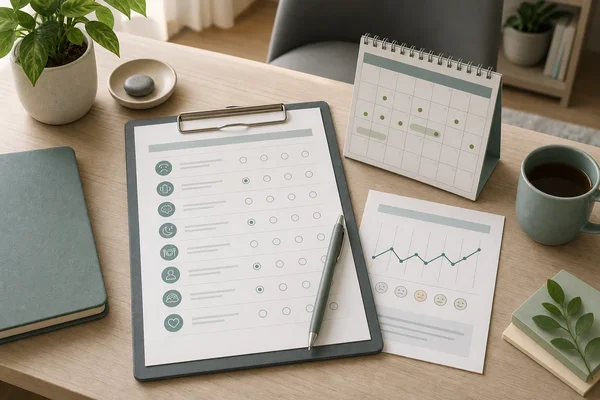
A depression assessment is not just a score. At its best, it organizes several pieces of information: how mood has changed, which symptoms are present, how long they have lasted, how daily life is affected, and whether there are safety concerns that need quick support. A self assessment for depression may help someone notice patterns before an appointment. A medical assessment for depression may add health history, medication review, sleep concerns, substance use, grief, chronic pain, or other factors that can shape mood.
This distinction matters because people often search for the best assessment for depression as if one tool can answer every question. In practice, different tools answer different questions. Some are brief screening tools. Some are severity scales. Some are specialized for youth, postpartum care, older adults, nursing workflows, research, or therapy planning. A useful assessment tool for depression should fit the person, setting, purpose, and follow-up plan.
Common Depression Assessment Tools and When They Fit
The most common depression assessment in primary care is often the PHQ-9, a short questionnaire based on nine symptom areas. It is practical because it is brief, easy to repeat, and familiar across many care settings. People also search for a depression assessment questionnaire or depression assessment PDF when they want something printable or simple enough to review before an appointment.
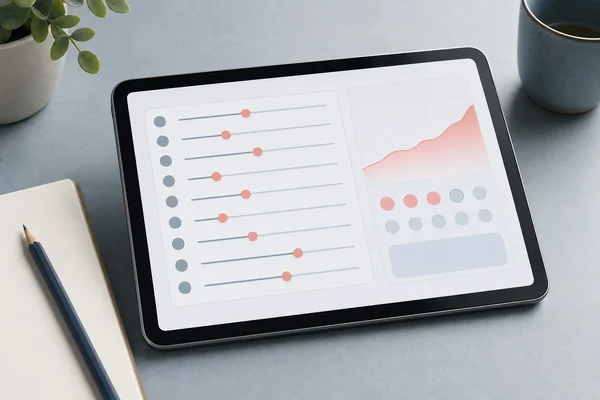
MADRS has a different role. The Montgomery-Asberg Depression Rating Scale is a 10-item severity scale often used to measure symptom intensity and change over time. It is especially relevant when the question is not only "are symptoms present?" but "how severe are they, and are they changing?" An online MADRS assessment can make that structured symptom review easier to access, while still keeping results in an educational and monitoring frame.
Other depression assessment tools include the Beck Depression Inventory, clinician-administered rating scales, structured clinical interviews, and tools designed for specific populations. The Edinburgh Postnatal Depression Scale is often discussed in postpartum settings. The Cornell Scale for Depression in Dementia is used with older adults when cognitive changes may complicate symptom reporting. Child and teen tools need age-appropriate wording, caregiver context, and professional interpretation. Occupational therapy assessments for depression may focus more on daily routines, participation, energy, motivation, and function.
What Happens in a Clinical Assessment of Depression
A clinical assessment of depression usually goes beyond a scale score. A clinician may ask about low mood, loss of interest, sleep, appetite, concentration, energy, guilt, slowed or agitated movement, thoughts of self-harm, and changes in work, school, relationships, or caregiving. They may also ask when symptoms began, whether they come in episodes, and whether medical conditions or substances could be involved.
Searchers often ask about the DSM-5 criteria for depression. In plain language, that framework looks at a cluster of symptoms over a meaningful period of time, the presence of either depressed mood or loss of interest, the level of impairment, and whether another explanation better fits the situation. A questionnaire can support that conversation, but it does not replace the full context a professional considers.
Risk and safety are also part of good assessment. A priority assessment for depression is often whether someone has thoughts of self-harm, feels unsafe, cannot care for basic needs, or has rapidly worsening symptoms. If any of those are present, the next step should be immediate local crisis support, emergency care, or another trusted urgent resource. Scores are helpful, but safety always comes before score interpretation.
How to Choose the Right Assessment Tool for Depression
The right assessment depends on why the assessment is being used. For adults seeking a quick screen, a brief questionnaire may be enough to decide whether to talk with a professional. For treatment monitoring, a repeated severity scale can show whether symptom burden is moving up, down, or staying stable. For research, tools need standard scoring, consistent administration, and clear documentation.
Age and context matter. A depression assessment for teens should use youth-appropriate language and should not ignore school stress, family context, sleep patterns, social withdrawal, or irritability. A depression assessment tool for children needs even more caution and usually requires caregiver and professional input. For postpartum depression, assessment questions should account for birth recovery, sleep deprivation, intrusive thoughts, bonding concerns, and safety. In older adults, assessment tools for depression in the elderly may need to account for memory changes, grief, isolation, pain, or medication effects.
Professional setting also changes the lens. Nursing assessment for depression may focus on safety, sleep, appetite, functioning, medication adherence, and care coordination. CBT assessment for depression may explore thoughts, behaviors, avoidance patterns, and activity levels. Occupational health assessment questions for depression may focus on workplace functioning and reasonable support, while still respecting privacy and scope.

Questions to Ask Before and After a Depression Assessment
Before choosing an assessment test for depression, it helps to ask what you want the result to do. Are you trying to decide whether to seek support? Are you preparing for a medical visit? Are you monitoring treatment response? Are you trying to describe symptoms more clearly to a therapist? The purpose should guide the tool.
Use this short checklist before you rely on a score:
- What time period does the tool ask about?
- Does it measure screening, severity, change over time, or daily functioning?
- Is it designed for adults, youth, postpartum care, older adults, or a general population?
- Does it include a clear safety question or safety follow-up?
- Will the result be reviewed with someone qualified if symptoms are strong, persistent, or worsening?
- Can you repeat the same tool later under similar conditions?
After an assessment, write down what the score cannot show. A number may not capture grief, trauma, work stress, chronic illness, relationship strain, cultural context, or the difference between a terrible week and a longer pattern. A useful note might say: "My score was higher this week, sleep was worse, concentration dropped, and I missed two usual activities." That kind of context can be more useful than the score alone.
Using Depression Assessment Results Safely Over Time
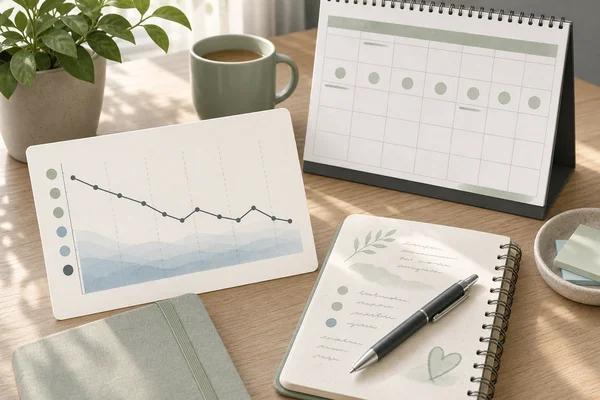
Assessments for depression become more useful when they are treated as snapshots rather than verdicts. One score can point to a conversation. Several scores, taken under similar conditions, can show a trend. If a score rises, that may be a reason to review stressors, sleep, medication changes, therapy goals, or safety. If a score falls, it can still be worth noting what changed, because improvement is easier to understand when it is tracked.
Try not to compare scores across completely different tools as if they were the same scale. A depression scale 1-10, PHQ-9 score, MADRS score, and narrative clinical note each describe mood from a different angle. The most helpful pattern is consistent use: choose a tool that fits the question, repeat it thoughtfully, and bring the results into a professional conversation when needed.
For people who want a calm way to organize recent symptoms, the MADRS score reflection tool can support a structured review of symptom severity over the past week. Use it as an educational aid, not as a replacement for care. If symptoms feel severe, persistent, confusing, or unsafe, a qualified mental health or medical professional can help connect the score with the larger life context.
FAQ
What assessments can be used for depression?
Common options include brief screening questionnaires, severity scales, clinician-led interviews, self-report forms, and specialized tools for postpartum care, youth, older adults, or research. PHQ-9 is common for quick screening, while MADRS is often used to measure severity and change over time.
What is the most common depression assessment?
In many primary care and general screening settings, PHQ-9 is one of the most commonly used tools because it is short and easy to repeat. "Most common" can vary by country, setting, and purpose. Research trials, specialty clinics, and therapy programs may use different scales.
What are the DSM-5 criteria for depression?
DSM-5 criteria are a clinical framework that considers symptom number, duration, impairment, and whether symptoms are better explained by another factor. In simple terms, clinicians look for a meaningful pattern that includes depressed mood or loss of interest, plus other symptoms such as sleep, appetite, energy, concentration, guilt, movement changes, or self-harm thoughts.
What are the 5 R's of depression?
There is no single universal "5 R's" list used everywhere. In practical education, the idea often points to steps such as recognizing symptoms, reviewing risk, responding with support, referring to appropriate care, and reassessing over time. The exact wording should matter less than timely support and thoughtful follow-up.
Is a self assessment for depression enough?
A self assessment can be useful for reflection and preparation, but it is not enough when symptoms are intense, persistent, worsening, or connected with safety concerns. It is best used as a starting point for tracking and conversation, especially when paired with professional guidance.
How do children and teens get assessed for depression?
Depression assessment for children and teens should use age-appropriate tools and include context from school, home, sleep, development, and caregivers when appropriate. Because young people may describe mood differently, professional interpretation is especially important.
How often should assessment scores be repeated?
The best interval depends on the purpose. For general self-reflection, repeating too often can make normal day-to-day mood shifts look bigger than they are. For treatment monitoring, a clinician may suggest a consistent schedule so changes can be compared more fairly over time.